










 LOG-IN
  Important Links/Sites
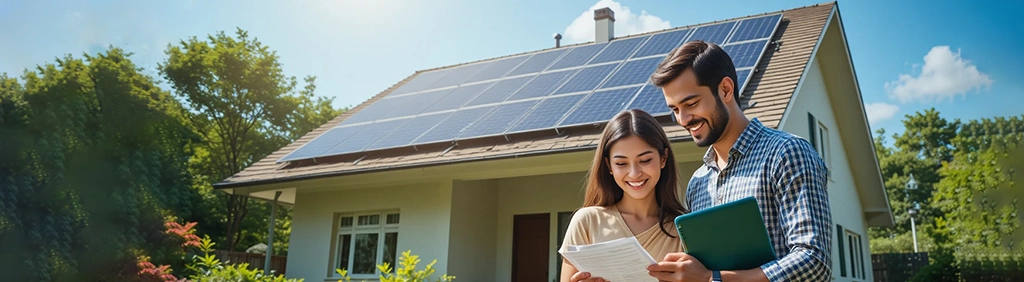
If you’re thinking about powering your home with clean, renewable energy, now is the perfect time. Thanks to government‑backed solar subsidy schemes and flexible green loans from banks, installing solar panels is more affordable and rewarding than ever. With the right financing and incentives, solar energy can lower your electricity bills and reduce your carbon footprint — all while increasing the value of your home.
In this guide, we’ll walk you through everything you need to know about getting a solar system for your home using financing options and subsidies step by step.
Why Solar Power Makes Sense for Your Home
Switching to solar energy offers benefits beyond just environmental impact:
- Cost savings - Solar systems reduce monthly electricity bills by generating power from sunlight.
- Long‑term returns - Solar panels typically last 20 to 25 years, delivering ongoing savings.
- Government incentives - National and state subsidy programs lower the upfront investment.
- Energy independence - Produce your own electricity and reduce dependence on the grid.
- Green lifestyle - Solar helps cut carbon emissions and supports sustainable living.
With these advantages, solar systems are not just an eco‑friendly choice, but a financially smart one too.
Understanding Government Solar Subsidies
The Pradhan Mantri Suryaghar Muft Bijli Yojana is India’s flagship national solar subsidy program designed to promote clean energy adoption at the household level. Under this initiative:
- Homeowners can receive direct subsidies of up to ₹78,000 for rooftop systems up to 3 kW.
- ₹30,000 per kilowatt is offered for the first kW, ₹60,000 for 2 kW, and ₹78,000 for 3 kW systems.
- Subsidy amounts are credited directly to your bank account on successful installation and inspection.
In some states, including Maharashtra, additional incentives may be available through state energy programs that further reduce installation costs.
Steps to Convert Your Home to Solar
Step 1: Assess Your Energy Needs
Begin by reviewing your electricity bills for the past year to understand your average power usage. This helps you determine what size solar system — whether 1 kW, 2 kW, 3 kW, or larger — will meet your home’s energy needs.
You’ll also want to check whether your rooftop has enough sunlight exposure. Ideally, roofs that face south or are free from shade generate more energy.
Step 2: Choose a Solar System
There are two main types of residential solar setups:
- Grid‑connected (net‑metered) systems — These are linked to the power grid so you can export excess electricity you generate and get credit on your energy bills.
- Hybrid systems — These include batteries to store power for use at night or during outages (more expensive but offers backup power).
A typical 1 kW rooftop solar system can generate roughly 1,200‑1,400 units of electricity per year, so choose a system size based on how much power you consume.
Step 3: Get Multiple Quotes From Vendors
Seek quotations from MNRE‑approved solar vendors. Ensure your quote includes all components like solar panels, inverter, mounting structures, wiring, and warranties. Only systems installed by approved vendors qualify for subsidy support, so this step is critical.
Step 4: Apply for Subsidies
You can apply for solar subsidies through the National Solar Rooftop Portal or via your local electricity board (DISCOM). You will typically need:
- Proof of identity and address
- Latest electricity bill
- Roof ownership documents
- Vendor quotation with component details
Once installed, your DISCOM will inspect the system, and subsidies are credited directly into your bank account.
Step 5: Arrange Financing with a Green Loan
Even with subsidies, solar installations may require an upfront cost. This is where green financing comes in. Banks offer loans specifically for renewable energy projects such as rooftop solar installations. These loans cover most or all of your system cost, helping you pay in easy monthly instalments.
For example, banks provide residential solar loans that can finance systems between 3 kW and 10 kW for homes. The interest rates and repayment terms vary but are structured to keep EMIs affordable.
Step 6: Installation and Net‑Metering
Once your financing and subsidy approvals are in place:
- The approved vendor installs the system on your roof.
- After installation, your local DISCOM inspects and approves the system.
- A net meter is installed that tracks electricity consumed and generated.
Once commissioned, your solar system begins producing clean energy — and any excess you generate can reduce your future electricity costs through net‑metering benefits.
Step 7: Monitor and Maintain Your Solar System
Modern solar systems often come with online monitoring tools that show real‑time energy production. To maximise performance:
- Keep solar panels clean and free from dust or debris.
- Schedule periodic checks of the inverter and electrical connections.
- Most solar panel components have warranties that last decades.
Maintenance costs are typically low compared to the long‑term savings on your power bills.
How Solar Saves You Money
Let’s break it down with an example:
Suppose you install a 3 kW rooftop solar system costing ₹2,00,000. After a central subsidy of ₹78,000, your effective investment becomes about ₹1,22,000. If your system generates ~3,600 units per year and electricity costs ₹8 per unit, you could save around ₹28,800 annually.
This means your solar investment could pay for itself within 4-6 years, and with panels lasting over 20 years, the savings continue long after.
Final Thoughts
Transitioning to solar energy is no longer just an environmental choice — it’s a financially intelligent one. With government subsidies like the Pradhan Mantri Suryaghar Muft Bijli Yojana and tailored green financing options, rooftop solar systems are within reach for many homeowners.
By pairing subsidised solar installations with affordable loans, you can begin saving on electricity bills almost immediately, contribute to a cleaner planet, and secure a stable energy future for your home.
Now is the right time to let the sun power your home and your savings while embracing a more sustainable lifestyle.
Author: Bank of Maharashtra
Date of Publish: 01 Nov, 2025














 Public Information
  Gallery
  Social Activity
  Assets for Sale
  Tenders
  ..
..